Every few months, a new “green” material trends on social media. Some vanish in weeks while others quietly reshape industries. Hemp plastic belongs to the second category.
But since every young industry is flooded with irrational exuberance and big promises, people keep asking:
- Is hemp plastic biodegradable?
- Is hemp plastic compostable?
- How long does hemp plastic take to decompose?
- Does hemp plastic need industrial composting, or can it break down at home?
These are very valid questions and need answers based on evidence.
Let’s take a walk through the science, the standards, and the honest possibilities behind this plant-based revolution. I will reveal every fact and state it as it is without any exaggeration.
Understanding Hemp Plastic: Types, Strength, and Sustainability
Before I answer, you have to understand what hemp plastic is.
Think of hemp bioplastic as a material born from plants, not petroleum.
The main ingredient is hemp cellulose. It is a natural polymer that forms the building block of the hemp stalk. After extraction and processing, this cellulose can be made into everything from films and trays to casings and automotive parts.
Depending on how it’s made, hemp plastic can take several forms:
Tea bags made with PLA
From Wikipedia
Now, there is a common myth around hemp plastic vs conventional plastic which should be dispelled at the outset.
Many people believe that anything “biodegradable” must be weak or flimsy. In reality, hemp bioplastic’s strength is one of its biggest assets. Lab tests and real-world use show hemp plastic is up to 2.5 times stronger and five times stiffer than polypropylene, a type of plastic used in everything from car bumpers to food containers.
Moreover, hemp cultivation leads to carbon capture. Hemp can absorb more CO₂ during growth than most other plants. Some estimates suggest it can absorb 15 to 22 tons of CO₂ per hectare per year, making it ideal for removing greenhouse gases.
Now that you know about different types of hemp plastic and the advantages, let’s move to an even more important question.
Is hemp plastic really biodegradable, or is that just a marketing claim?
Is Hemp Plastic Truly Biodegradable?
The short answer is yes, hemp plastic is biodegradable. But degradation only happens when there is adequate oxygen and microorganisms.
Biodegradability means microorganisms can break the material into CO₂, water, and biomass within a specific timeframe.
Hemp fibers naturally break down because they’re made of cellulose. However, for a hemp plastic to fully decompose, its plant-based binder (or glue) must also be compostable.
Keep in mind that not all hemp plastics are created equal. If the plastic is blended with petroleum-based polymers to reduce cost, it won’t fully biodegrade. Thus, the purity of hemp plastics plays a key role in biodegradability.
There are specific standards to which every major manufacturer of hemp plastics adheres. The most well-known are global standards like ASTM D6400 (USA) and EN 13432 (Europe). For both, products must naturally decompose at a commercial composting plant. However, they have separate standards for the decomposition and the resulting compost’s quality.
Under What Conditions Does Hemp Plastic Break Down?
Biodegradation depends on two key factors:
- What is the plastic made of?
- Where it ends up after use.
In a modern compost facility (high temperature, moisture, and lots of microbes), most hemp bioplastics can break down in 3–6 months. Hemp bioplastics that meet ASTM D6400 or EN 13432 can decompose within 90 to 180 days.
In home composting, the process slows because temperatures rarely reach 60°C. A hemp plastic spoon or tray might take many months to fully vanish.
In landfills, where oxygen is limited, degradation can take a few years. Lack of oxygen can lead to the generation of methane gas by anaerobic bacteria.
Bottom line:
For the fastest biodegradation time, industrial composting is ideal. However, even in imperfect conditions, hemp bioplastics break down far faster than traditional plastics.
Is Hemp Plastic Compostable?
There is a difference between biodegradation and composting that many are not aware of.
Biodegradation is the natural process of organic matter breaking down by microorganisms. Composting is an accelerated and controlled version of this process. Note that every compostable hemp plastic is biodegradable, but not every biodegradable plastic is compostable.
To be considered as compostable, the following conditions have to be met:
-
It has to break down within a specific timeframe.
-
The disintegration does not leave visible residues.
-
The process produces compost that supports healthy plant growth.
That’s exactly what the ASTM D6400 and EN 13432 certifications test for. Instead of going deep into legal language, here is an easy way to understand the standards:
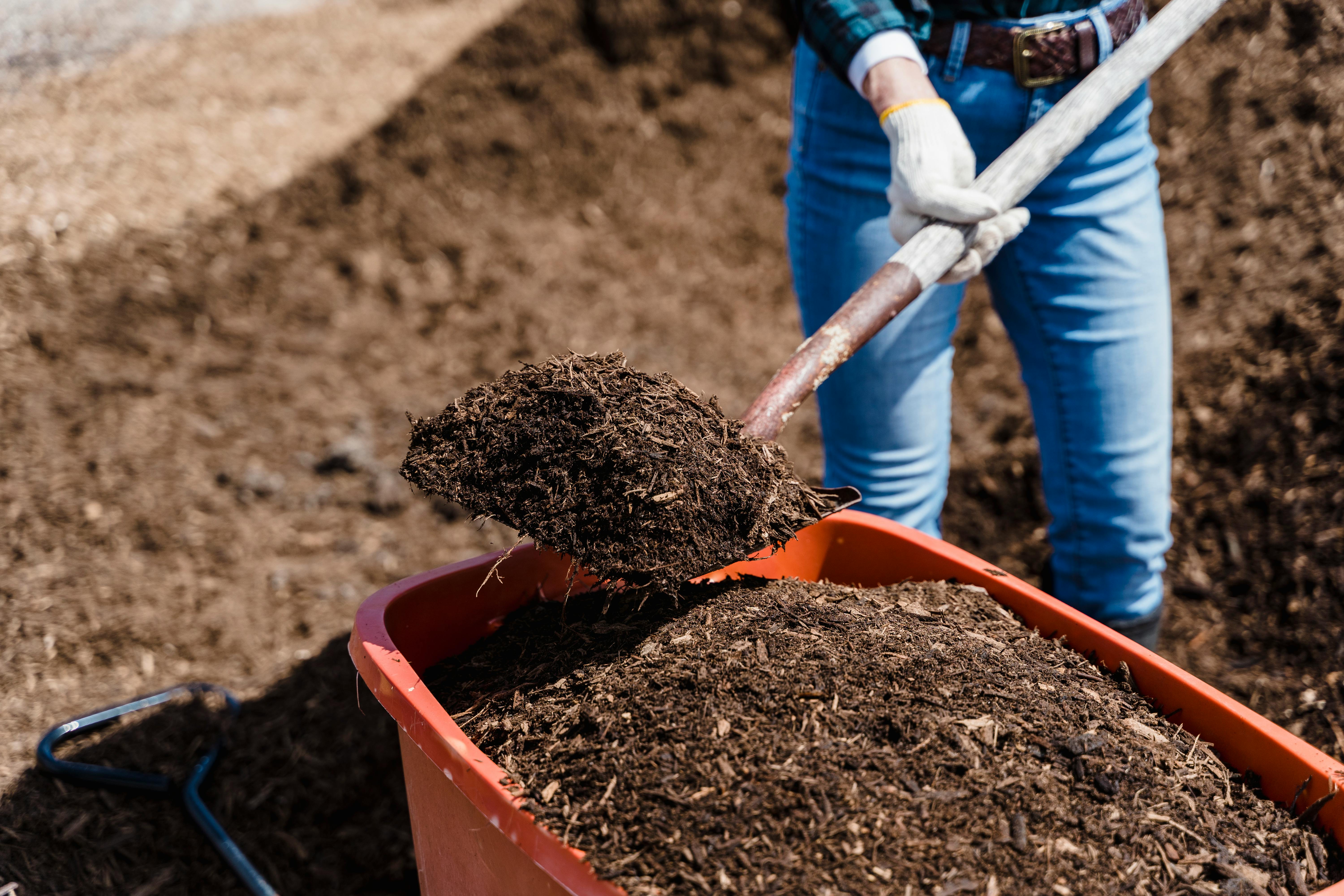
So, hemp plastic is compostable within a few months at an industrial composting facility. It can take up to a year if you leave it out in your backyard.

Making compost on an industrial scale
From Pexels
What Applications and Products Use Hemp Plastic Today?
Is hemp plastic already making a difference? The answer might surprise you.
The widespread application of hemp plastics is not a theory anymore. You’ll already find hemp fiber-reinforced bioplastics in several industries:
- Major car manufacturers use lightweight hemp composites in interior and exterior panels.
- Packaging industry hemp plastic for eco-friendly bags, films, containers, and product labels.
- Hemp plastic is found in electronics casings, household accessories, and disposable cutlery.
- It can replace fiberglass and is used for insulation and marine applications.
- Hemp plastic is used to make biodegradable plant pots and seedling containers.
- Researchers are exploring hemp plastic for disposable medical tools and potential implants.
Can We Trust Hemp Plastic as a Sustainable Solution?
I believe hemp plastic is the future – not as a trend, but as a transition.
There is a huge global demand for sustainable materials. Younger generations, in particular, prioritize sustainability and desire eco-friendly products. Hemp plastic, when made the right way and certified to the right standards, degrades safely. This natural material holds the key to cutting down on plastic pollution at its root.
There is intense research underway to make hemp plastic cheaper and scale up production. Let’s use our policies and investments to build a world where growth and sustainability walk hand in hand.
Frequently Asked Questions
Is hemp plastic biodegradable?
Yes, hemp plastic is biodegradable. It breaks down naturally and is compostable, unlike traditional plastics that take centuries to disappear.
How long does it take hemp plastic to decompose?
Hemp plastic can decompose in as little as 3 – 6 months in industrial composting. It can take up to a year in natural soil conditions.
Can hemp plastic be recycled?
Most hemp plastic is composted and not recycled since it is biodegradable in nature.
Is hemp plastic stronger than regular plastic?
Evidence suggests that hemp plastic is up to 2.5 times stronger and five times stiffer than polypropylene. This makes it both durable and eco-friendly.
Is hemp plastic safe for food packaging?
Yes, if certified for food contact, hemp plastic is safe for packaging use.
Trending Products

Hidkat Mens Corduroy Casual Pants F...

Chemo Headwear Head Wraps for Cance...

adidas Golf Men’s Standard Ul...

Gafeng Mens Linen Pants Yoga Beach ...

morhuduck Women’s Waffle Knit...

Shopoholic Fashion Mens Striped Gra...

Minibee Women’s Linen Blouse ...

Women’s Tube Tops Summer Casu...
LIVING LIBATIONS – Organic He...