If you’ve been following European news lately, you’ve probably come across the EU plastic tax.
This plastic levy in Europe is one of the most significant changes driving how European companies design, package, and sell their products.
But what exactly is the EU plastic tax or EU plastic levy?
Why are so many companies suddenly looking for alternatives like hemp bioplastic and hemp-based packaging?
And could this humble plant actually help reduce the financial and environmental burden of plastic use in Europe?
So let’s unpack the entire story step by step.
What Is the EU Plastic Tax and Why Does It Matter?
Across Europe, the EU Plastic Tax is a policy that has quietly begun to reshape how every business thinks about packaging. It is also called the EU plastics levy.
So, what exactly is it? Each EU member state must now pay the European Union a fixed fee, which is currently €0.80 for every kilogram of non-recycled plastic packaging waste.
Most governments are passing those costs down to businesses that use or import plastic packaging.
For companies, this means one thing: every gram of plastic you use now comes with a price tag.
Obviously, from food and drink brands to logistics and fashion retailers, everyone is feeling it. Even e-commerce businesses shipping across borders are now rethinking their packaging strategies.
This tax is a clear message that for anyone who does business in the EU, the days of cheap, disposable plastics are ending.
But the real story is not only about the cost. It’s about what comes next, as EU companies look for compliant alternatives.
Why Are European Companies Looking for Alternatives?
As the EU plastics levy expands, companies are realizing that compliance costs can climb fast. By the end of 2025, new packaging rules will make it mandatory for all materials to be recyclable or reusable.
So the focus is on reducing non-recycled plastic, which means higher fees for anything that doesn’t fit that goal.
On top of that, the Extended Producer Responsibility (EPR) systems across Europe are being redesigned. The less recyclable your packaging is, the more you pay. It’s what regulators call “eco-modulation.”
In response, businesses have to think how they can stay compliant, cut costs, and meet customer expectations.
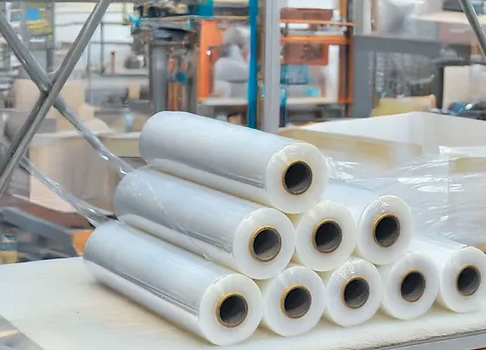
Cellophane wrapping made with PLA
From Wikipedia
One silver lining for European businesses is that even consumer behavior is changing too. A recent EU survey showed that 79% of Europeans are now actively cutting down their plastic use.
Many are even willing to switch or pay more for products with less plastic.
Which brings us to the question every business should ask: “If plastic is so heavily taxed, what can we use instead?”
Let’s look at why hemp is fast becoming one of the most promising answers.
How Hemp Packaging Helps Reduce Plastic Taxes and Fees
Hemp bioplastic and hemp fiber packaging are already reshaping how businesses approach the EU plastics tax.
So let’s learn a bit about hemp.
Hemp is a natural, high-cellulose plant. Its fibers can be processed into paper, molded fiber trays, wraps, and textiles, which can replace plastic components.
If your packaging is mostly made from hemp paper, molded fiber, or textiles, it’s no longer classified as “plastic.” That means a business that can switch to hemp based alternatives to plastic will pay lower or even zero plastic tax.
Businesses are already using this to their advantage.
- Food brands are replacing plastic trays with hemp fiber inserts
- Retailers are using hemp paper mailers instead of polybags
- Logistics companies are switching to fiber-based wraps and pads
Here are a few real-world examples:
- In Germany, companies like PAPACKS switched from plastic to molded hemp fiber for electronics and food trays. This saves them hundreds of thousands of euros annually on plastic taxes and recycling fees.
- Dutch companies like HempFlax supply major retailers with hemp paper and molded packaging. This helps the retailers save on EU plastic taxes and run a sustainable business.
As someone who has walked factory floors and seen this shift firsthand, I can tell you: the moment companies test hemp packaging, they realize it’s not just an environmental choice. It’s a smart business decision.
Switching to packaging made from hemp bioplastic or fiber is more than just a way to avoid the EU plastic tax. It also makes sustainability a core value of your business.
Which Countries in Europe Use Hemp Packaging the Most?
Across Europe, several nations are moving ahead at a rapid pace and shifting to hemp-based packaging. Here’s a look at how major markets classify and support hemp-based materials:
Each of these countries shows one truth: the future of packaging isn’t synthetic. It’s agricultural.

Hemp-based packaging film
From Hemp Foundation
There is also another clear message. Countries moving fastest are not just reacting to regulation. But they’re reshaping the future of packaging and widespread use of hemp plastic is seen as the way ahead.
To be clear, traditional plastics have dominated packaging for six decades. The shift away from millions of tons of wrapping films, containers, bags is not going to happen overnight. There are some challenges ahead and this is where strategy and planning matter most.
The Challenges of Switching to Hemp
As promising as hemp is, the shift isn’t going to be easy. There are a few hurdles businesses must prepare for.
Cost: This is, of course, of prime concern. At the moment, hemp packaging is more expensive than traditional plastic. But as production scales, prices are dropping each year.
Supply chain: Access to reliable fiber quality depends on consistent cultivation and processing. Certified suppliers who are invested in the change help ensure stability.
Certification: Businesses must label packaging as compostable or recyclable and meet standards like EN 13432 compliance. This ensures your product is genuinely sustainable and legally protected from “greenwashing.”
Documentation: Every tax exemption or EPR reduction must be accompanied by proper paperwork. That means proper bills of materials and supplier certifications for each component have to be diligently maintained.
These steps may sound tedious, but they’re part of the learning curve. Once systems are in place, hemp packaging becomes both practical and profitable.
The Road Ahead
In the end, the EU plastic levy isn’t a punishment. It’s a push for us to rethink what we make, how we package it, and what kind of world we leave behind.
And if that change begins with something as humble as a hemp-fiber box or mailer, that’s not a small step at all. That’s the start of a better story.
Frequently Asked Questions
1. Is there a plastic tax in Germany?
Germany will implement a plastic packaging tax in 2025, charging for non-recycled plastic packaging waste.
2. How does the EU plastics levy impact companies?
The EU plastics levy makes companies pay for every kilo of non-recycled plastic packaging. It raises costs and pressures firms to switch to alternatives.
3. Are all types of bioplastics exempt from the plastic tax in Europe?
No. Only fiber-based packaging, like pure hemp and not bioplastics, is typically exempt from most plastic tax rules.
4. What steps help reduce plastic tax in Spain and the UK?
All business owners have to begin replacing plastic with hemp packaging. Overall, they have to try and use more recycled content. Hemp fiber must be the main material by weight to minimize tax costs.
5. What is the current EU plastic tax rate?
It’s €0.80 per kg of non-recycled plastic and will possibly rise to €1.00.
Trending Products

Hidkat Mens Corduroy Casual Pants F...

Chemo Headwear Head Wraps for Cance...

adidas Golf Men’s Standard Ul...

Gafeng Mens Linen Pants Yoga Beach ...

morhuduck Women’s Waffle Knit...
Shopoholic Fashion Mens Striped Gra...

Minibee Women’s Linen Blouse ...

Women’s Tube Tops Summer Casu...
LIVING LIBATIONS – Organic He...